Sperm whales off Pico
When are sperm whales recorded off Pico?
Quick answer
Sperm whales are the most-recorded cetacean in the waters around Pico: OBIS holds 11,027 records, logged in all 12 months, with July the busiest. Those are sightings logged, not animals counted, and most are made in summer when the boats are out. The IUCN Red List classes the species as Vulnerable.
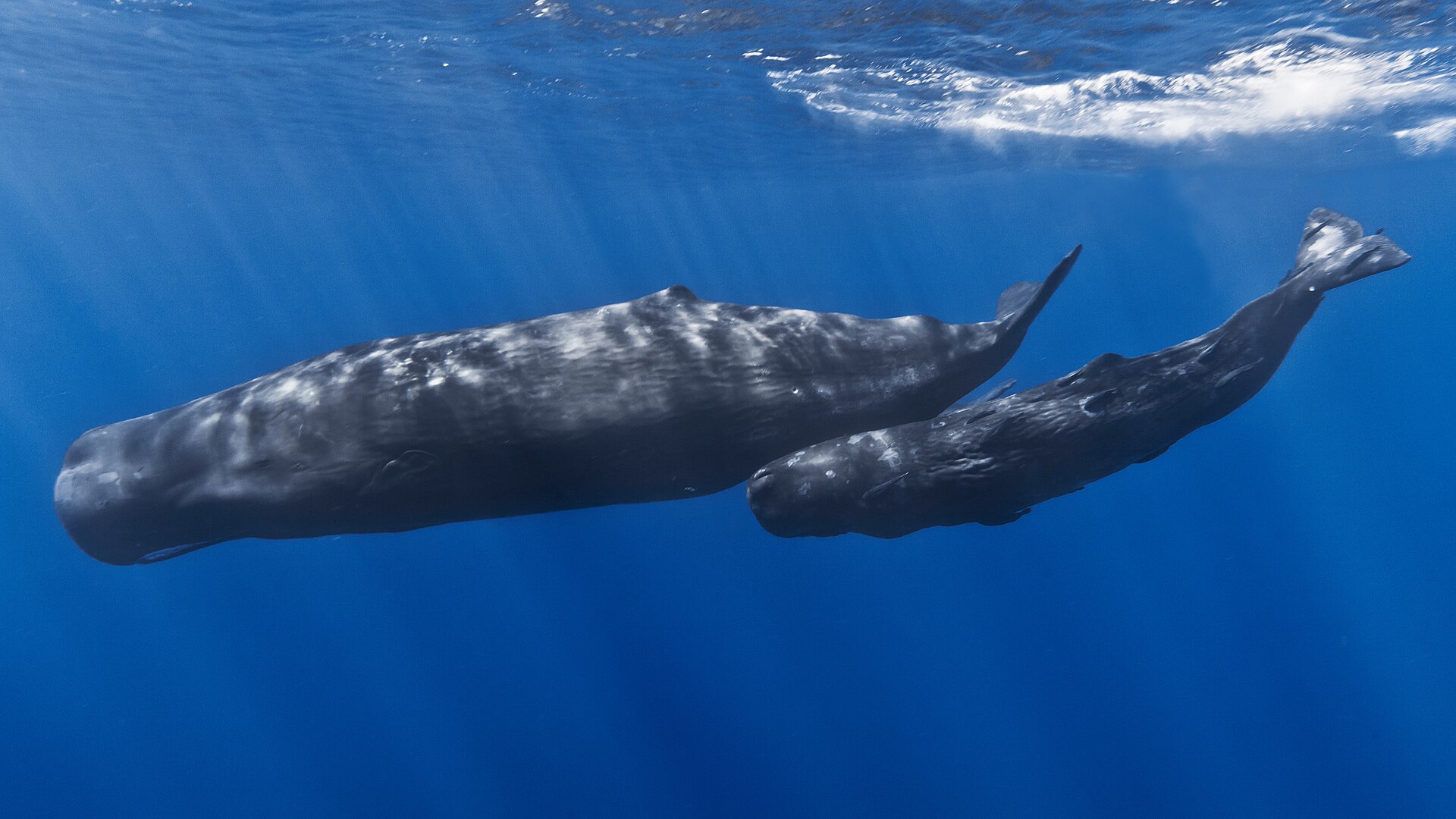
The animal
The sperm whale, Physeter macrocephalus, is the largest of the toothed whales. Unlike the blue and fin whales, which strain small prey through baleen plates, it hunts with teeth and sound, diving deep for squid and spending long stretches out of sight between breaths at the surface.
It is also the animal Pico's history is built around. The open-boat whaling that shaped Lajes do Pico hunted sperm whales, and the whalers' museum in the town tells that story. The same species now fills more of the scientific record for these waters than any other cetacean.
What the records show
OBIS holds 11,027 sperm whale records inside the box of sea around Pico that this site queries, more than any other whale or dolphin there. They are spread across all twelve months, which no other species on these pages manages: the common dolphin, the next most recorded, has no records at all from November to February.
July is the busiest month, with 2,989 records. June and August come next, and the count falls away sharply through October and November. The winter months are thin but never empty.
How to read that
These are records, not animals, and not a forecast. A record is one logged observation, so a single group followed by several boats can produce several of them. Records are made by people on the water, and far more people are on the water in summer than in January. The summer peak is therefore partly a peak in effort, and the thin winter months are partly an absence of boats. What the data does support is narrower and still worth knowing: sperm whales have been logged here in every month of the year.
Conservation status
Wikidata, citing the IUCN Red List, gives the sperm whale's status as Vulnerable. The species was described by Linnaeus in 1758.
Related
- All five species, and how the counts are built: whale and dolphin species off Pico.
- The rarest of them in the data: the orca.
- Every species month by month: the season calendar.
- The approach rules and the licensed operators: whale watching on Pico.
Size, weight and diving depth are not given here, because none has been checked against a primary source.
Facts and sources
| Fact | Value | Source |
|---|---|---|
| Scientific name | Physeter macrocephalus | source ↗ |
| Described by | Linnaeus, 1758 | source ↗ |
| IUCN Red List status | Vulnerable | source ↗ |
| Most-recorded cetacean species in OBIS (Pico waters) | Sperm whale | source ↗ |
| Sperm whale records in OBIS (Pico waters) | 11,027 | source ↗ |
| Months with records | 12 of 12 | source ↗ |
| Busiest month in the records | July | source ↗ |
| Records in the busiest month | 2,989 | source ↗ |