Verdelho, the grape of Pico
What is Verdelho, and how did it become the grape of Pico's wine?
Quick answer
Verdelho is a white Portuguese wine grape and, with Arinto dos Açores and Terrantez do Pico, one of the three main grapes of the Pico designation of origin. Those three must supply at least 85% of any DO Pico wine. The designation began in 1994 for fortified white wine alone, and today that style must age 36 months before bottling.
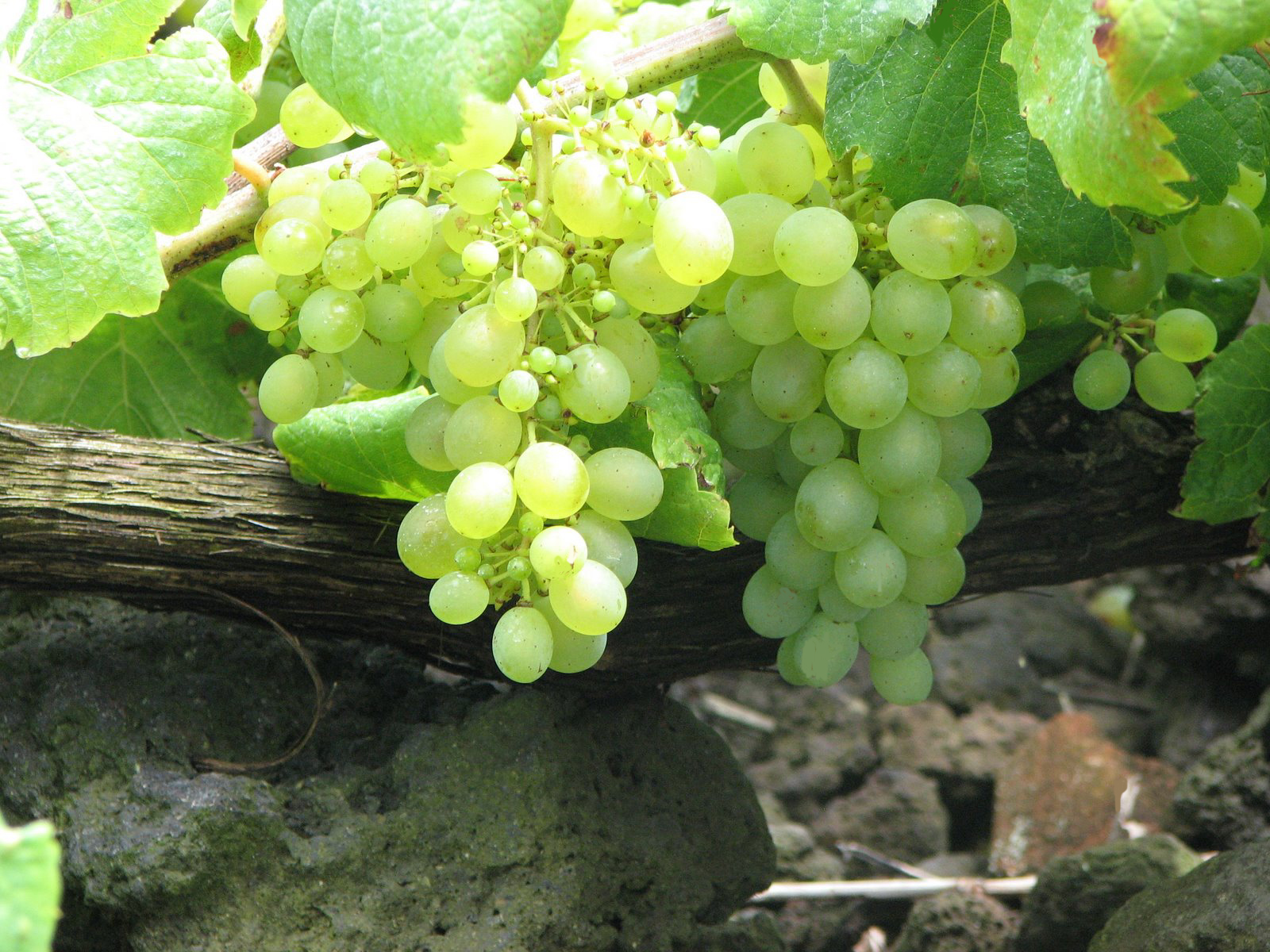
What the grape is
Verdelho is a white wine grape of Portuguese origin. The Vitis International Variety Catalogue (VIVC), the grape variety register kept by Germany's Julius Kühn Institute, files it under the prime name Verdelho Branco, variety number 22304. DNA markers confirm one parent, Savagnin. The other is recorded as unknown.
The same record lists 17 synonyms, and two of them are Pico's own: "Verdelho Pico" and "Vedelho de Pico". Others carry the names of the other Atlantic islands, "Verdelho dos Açores" and "Verdelho da Madeira" among them. That is the short version of the grape's history: one variety, carried around the Portuguese islands, and called on each one by the island's name.
Pico's wine, and the trade
The vine reached Pico with its first settlers. The current DO Pico specification dates the island's settlement to 1460 and says it brought the first vines, which spread quickly. What made them viable was the curral, the small plot walled with lava cleared from the ground to break the salt wind. The UNESCO vineyard landscape is that work, at the scale of a coastline.
The wine travelled. The 1994 decree that created the Pico designation says so in its preamble, in a sentence about the Azores as a whole: some of the islands' wines were exported to several countries, where they won a deserved fame. That is as far as this page goes on the export trade. The best-known detail, that Pico wine reached the Russian imperial court, is widely repeated but has not been checked here against a primary source, so it is reported as a story rather than as a fact. Czar Winery, at São Roque, carries the story in its name.
The designation
Decreto-Lei 17/94, of 25 January 1994, recognised "Pico" as a regulated designation for fortified white wine of quality, a category the law of the time called VLQPRD. It drew the zone on low coastal ground in the west, on the north coast and at the eastern end of the island, including Criação Velha, Santa Luzia and the Piedade localities of Engrade and Manhenha. It named three recommended grapes: Verdelho, Arinto and Terrantês.
Today's rules are the specification for DO Pico published by the national wine institute (IVV), dated January 2024 and approved by Portaria 30/2019, republished by Portaria 98/2022. The delimited area is still land no higher than 100 m above the sea. Four kinds of wine now qualify: still, fortified (licoroso), sparkling, and wine from overripe grapes.
The three main grapes now carry their full names: Arinto dos Açores (whose recognised synonym is Terrantez da Terceira), Verdelho and Terrantez do Pico. Together they must supply at least 85% of the blend. The rest may come from two secondary grapes, Galego Dourado and Malvasia Fina (also called Boal), up to 15%. A fortified DO Pico wine needs at least 16% vol of alcohol and 36 months of ageing before it is bottled, and no vineyard may yield more than 70 hl per hectare.
Tasting it on the island
To taste what the grape makes, book an adega. The cooperative Picowines is in Madalena, a walk from the ferry; the Azores Wine Company sits among the currais on the north-west coast; Czar Winery is on the north coast at São Roque. Which wines each one pours, and whether a single-grape Verdelho is among them on the day, is theirs to say: ask when you book. The wine country page sets the three side by side.
What this page does not tell you
No prices, no tasting notes and no vintages. The planted area of Verdelho on Pico, in hectares, is absent: no primary source reached for this page states it. The regional regulation itself is published in the Jornal Oficial dos Açores, which refused our requests, so its content is taken here from the IVV specification that cites it.
One caution for anyone following the data. Wikidata's item for the grape links to a different VIVC record, one that VIVC itself names Gouveio. The VIVC record cited on this page is the one that lists Pico's own names for the grape.
Facts and sources
| Fact | Value | Source |
|---|---|---|
| VIVC prime name | Verdelho Branco | source ↗ |
| VIVC variety number | 22304 | source ↗ |
| Country of origin | Portugal | source ↗ |
| Parent confirmed by DNA markers | Savagnin (the other parent is unknown) | source ↗ |
| Synonyms recorded by VIVC | 17 | source ↗ |
| Pico names among the synonyms | Verdelho Pico; Vedelho de Pico | source ↗ |
| Wikidata item | Q1540261 | source ↗ |
| Pico designation created by | Decreto-Lei 17/94, of 25 January 1994 | source ↗ |
| Category in 1994 | VLQPRD (fortified white wine of quality) | source ↗ |
| Recommended grapes in 1994 | Verdelho, Arinto, Terrantês | source ↗ |
| Current specification | DO Pico (PDO-PT-A1445), January 2024 | source ↗ |
| National approval | Portaria 30/2019 of 2 May, republished by Portaria 98/2022 of 17 November | source ↗ |
| Main grapes | Arinto dos Açores, Verdelho, Terrantez do Pico | source ↗ |
| Main grapes, minimum share of the blend | at least 85% | source ↗ |
| Secondary grapes | Galego Dourado, Malvasia Fina (Boal) | source ↗ |
| Secondary grapes, maximum share of the blend | at most 15% | source ↗ |
| Wine categories | still, fortified (licoroso), sparkling, and wine from overripe grapes | source ↗ |
| Fortified wine, minimum alcohol | 16% vol | source ↗ |
| Fortified wine, minimum ageing before bottling | 36 months | source ↗ |
| Maximum yield | 70 hl per hectare | source ↗ |
| Delimited area, altitude limit | 100 m | source ↗ |
| Settlement that brought the first vines | 1460 | source ↗ |